Navy Rescue Swimmer Training Requirements | Real SAR Pipeline Explained
Navy Aviation Rescue Swimmer
A Navy Aviation Rescue Swimmer is the person who leaves the helicopter when the situation on the surface has already gone bad.
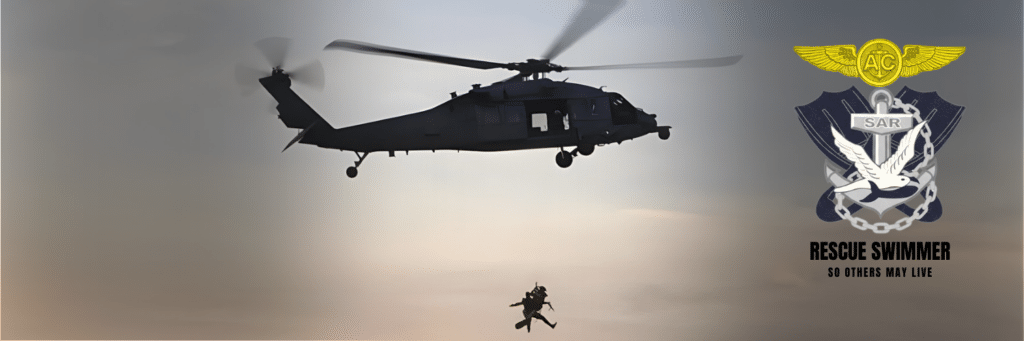
When a distress call comes in—an aircraft down at sea, a sailor overboard, a vessel taking on water, or survivors in heavy surf—the helicopter responds. The aircraft can hover overhead, but it can’t land in most of these environments. Someone has to go into the water.
That responsibility belongs to the rescue swimmer.
By jumping from the helicopter or being lowered by a hoist, the swimmer enters the water to reach the survivor, stabilize the situation, and prepare them for extraction. Conditions are rarely calm. Cold water, breaking seas, debris, darkness, and injured survivors are common variables. The swimmer becomes the lifeline between the survivor and the aircraft above.
The job isn’t about adrenaline. It’s about preparation, discipline, and the ability to stay calm while solving problems in environments that remove margin quickly.
What Is a Navy Rescue Swimmer
A Navy Aviation Rescue Swimmer operates as part of a helicopter crew during Search and Rescue (SAR) and Combat Search and Rescue (CSAR) missions.
SAR missions typically involve maritime rescues—mariners in distress, capsized vessels, medical evacuations from ships, or aircraft incidents at sea. CSAR missions occur in combat environments, where the objective may be to recover special operators, downed aircrew, or isolated personnel.
Helicopter operations place the crew directly over the rescue site. Aircraft such as the MH60 Seahawk or similar platforms fly low enough for the swimmer to jump or hover above the scene while the rescue swimmer is lowered by hoist into the water.
Deployment environments vary widely. Rescue swimmers operate from ships, shore bases, and expeditionary locations around the world. Missions can occur in heavy surf near coastlines, open ocean swells hundreds of miles offshore, or austere conditions where weather and visibility complicate the rescue.
Once in the water, the swimmer carries full responsibility for reaching the survivor, assessing their condition, and preparing them for hoist back to the aircraft. The helicopter crew supports the operation from above, but the swimmer is the only member physically in the environment with the survivor.
Navy Rescue Swimmer Training Pipeline
Becoming a rescue swimmer requires completing a demanding training pipeline designed to test both physical capability and mental control.
1. Recruit Training (Boot Camp)
Training begins at the Navy boot camp. Recruits are introduced to military discipline, physical conditioning, and basic water survival. For future rescue swimmers, this phase establishes the foundation for the training that follows. Candidates also conduct additional physical and water training alongside others pursuing special warfare pipelines such as SEAL, EOD, SWCC, and Navy Divers.
The focus here is less about advanced water skills and more about preparing recruits for the pace and expectations of the military environment.
2. Aviation Rescue Swimmer School (RSS)
Rescue Swimmer School is where the real screening happens.
This phase centers heavily on water confidence. Candidates spend long hours in the pool performing drills that simulate stress, fatigue, and disorientation in the water. The goal is not simply swimming ability—it’s the ability to remain calm and functional when oxygen is limited and conditions become uncomfortable.
Pool evolutions, underwater drills, and endurance swims are designed to test whether a candidate can operate effectively in the environment where real rescues occur. Training also includes advanced first aid and medical response, preparing swimmers to assess injuries, stabilize survivors, and provide immediate care while preparing them for extraction and transfer to higher medical care.
Many candidates who arrive in strong physical condition discover quickly that water confidence—not strength—is the deciding factor.
3. Aviation Training Pipeline
After completing swimmer school, candidates continue into aviation training specific to helicopter operations.
This phase introduces equipment systems, rescue gear, and coordination with the aircraft crew. Swimmers learn how hoist operations work, how to approach survivors safely, and how to prepare individuals for extraction into the helicopter.
The swimmer becomes part of a larger crew system, learning to communicate clearly with pilots and aircrew while managing the rescue on the surface.
4. Fleet Assignment
Once training is complete, rescue swimmers report to operational squadrons in the fleet.
This is where training transitions into real missions. Swimmers participate in regular training evolutions with their crews—hoist drills, open water recoveries, medical response scenarios, and deployment preparations.
The expectation in the fleet is simple: when the call comes, the crew is ready.
Physical Requirements
Candidates must demonstrate:
• Strong endurance in the water
• Consistent swimming performance over distance
• Confidence while submerged or underwater
• The ability to remain composed during physically demanding drills
Underwater confidence is particularly important. Training frequently places candidates in situations where they must control breathing, remain calm underwater, and solve simple tasks while oxygen is limited.
Water survival drills reinforce these skills. Candidates practice survival techniques, equipment management in the water, and methods of stabilizing survivors until extraction.
Endurance is also critical. Rescue swimmers often operate after long flights or extended mission durations, and physical fatigue cannot compromise judgment or effectiveness.
What Makes People Quit
Many candidates arrive believing the greatest challenge will be strength or endurance. In reality, most who leave the pipeline do so because of water confidence.
Common reasons include:
• Water confidence failures
Underwater drills can expose hesitation or panic. If a candidate cannot remain calm when submerged, it becomes difficult to continue safely.
• Panic under stress
Training deliberately introduces controlled stress to replicate the confusion and pressure of real rescues. Candidates must demonstrate that they can think clearly even when uncomfortable.
• Mental fatigue
The training environment is repetitive and demanding. Long days in the pool combined with physical exertion and constant evaluation create mental fatigue that tests resilience.
Those who succeed are usually the candidates who stay steady when conditions become uncomfortable.
What Training Is Actually Like
From the outside, rescue swimmer training is often portrayed as constant action. In reality, much of the work happens through repetitive drills designed to build automatic responses.
Pool evolutions form the backbone of training. Candidates perform drills that develop water confidence, endurance, and composure underwater.
Gear work teaches swimmers to manage fins, masks, rescue harnesses, and flotation equipment while maintaining awareness of the survivor and the aircraft above.
Drown-proofing drills reinforce the ability to remain calm and conserve energy while staying afloat or maneuvering in the water without relying on constant movement.
Helicopter hoist operations connect all of these skills. Swimmers practice entering the water from the aircraft, approaching a survivor, and coordinating with the hoist operator during extraction.
The goal of these evolutions is simple: build a system of responses that hold up when real missions become chaotic.
How Hard Is Navy Rescue Swimmer Training?
Navy Rescue Swimmer training is widely considered one of the most demanding training pipelines in the military. The training focuses heavily on water confidence, endurance, and the ability to stay calm in environments where fatigue and limited oxygen quickly compound stress. Many candidates arrive in excellent physical condition but discover that composure in the water—not strength—is what determines whether they finish the program.
Advice for Someone Considering the Pipeline
Anyone considering the rescue swimmer pipeline should approach preparation with realism.
Swim more than you think you need to.
Comfort in the water matters far more than raw speed.
Get comfortable underwater.
Controlled breath-holding drills and underwater swimming help build confidence that will be tested during training.
Develop endurance.
Long swims and sustained physical effort are part of the environment.
Learn to stay calm when oxygen drops.
The ability to control breathing and remain steady when uncomfortable is one of the most important skills a candidate can develop.
Strength and conditioning matter, but composure in the water is what ultimately separates those who finish the training from those who don’t.
Be prepared for one of the most selfless service roles there is, lived out for a single purpose: So Others May Live.

Calm in the Chaos: True Tales from Elite U.S. Navy Aviation Rescue Swimmers
From an elite Navy rescue swimmer comes this insider perspective on what it takes to survive some of the most dangerous situations imaginable — and how the lessons learned can help overcome other momentous challenges.

Calm in the Chaos – U.S. Navy Aviation Rescue Swimmer Podcast
Calm in the Chaos shares real rescue stories from the U.S. Navy’s Aviation Rescue Swimmers. Hosted by Brian Dickinson—bestselling author, former Navy Rescue Swimmer, and Everest solo summiteer. Ranked in the top 10% of podcasts worldwide, the show digs into the grit, mindset, and faith it takes to run toward the chaos.
So Others May Live!
Related:
• How Hard Is It to Climb Mount Everest?
• Calm in the Chaos Podcast
• Rescue Swimmer Books