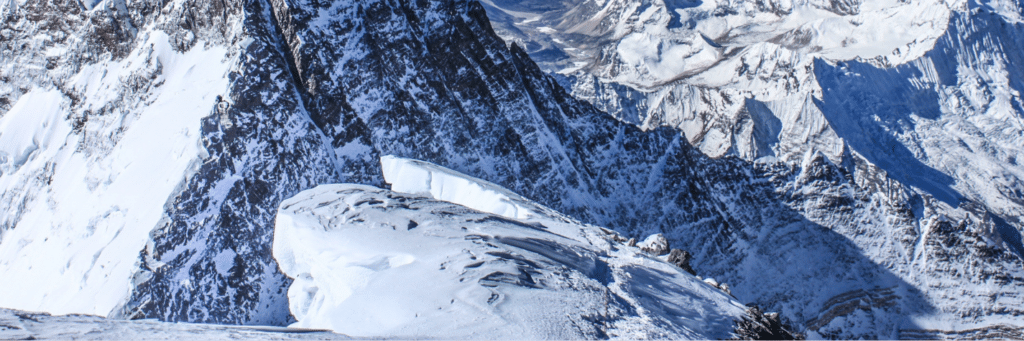
What Is the Death Zone on Mount Everest?
Standing above 26,000 feet on Mount Everest, climbers enter an environment known as the Death Zone. At this altitude the human body can no longer acclimatize. Oxygen levels drop so low that physical and mental performance begin to deteriorate quickly.
The Death Zone is not just a dramatic name used in documentaries. It describes a physiological reality. The higher a climber ascends above 8,000 meters (26,247 feet), the less oxygen is available in every breath. Even simple tasks require deliberate effort.
For climbers attempting the summit of Everest, the Death Zone represents the most dangerous part of the mountain.
Why the Body Deteriorates Above 8,000 Meters
At sea level, the air contains enough oxygen to support normal physical and cognitive function. At 8,000 meters, however, the air pressure is so low that every breath delivers significantly less oxygen to the bloodstream.
This lack of oxygen creates a condition known as hypoxia, which affects nearly every system in the body.
Climbers experience:
- severe fatigue
- reduced coordination
- slowed reaction times
- impaired judgment
The body cannot recover in this environment. Instead, it slowly begins to break down.
This is why climbers spend as little time as possible above 8,000 meters.
Oxygen Deprivation in the Death Zone
Most climbers use supplemental oxygen while moving through the Death Zone, but even with oxygen support, the body is operating far below normal capacity.
Each step requires controlled breathing. Movements become slower and more deliberate. Tasks that would normally take seconds can take minutes.
Oxygen deprivation also affects decision-making. Judgment becomes slower and sometimes distorted, which is one reason climbers must rely heavily on preparation and discipline rather than impulse.
Cognitive Decline at Extreme Altitude
One of the most dangerous effects of the Death Zone is cognitive decline.
Low oxygen levels affect the brain’s ability to process information quickly. Climbers may struggle with simple calculations, navigation decisions, or evaluating weather changes.
Situational awareness can degrade.
This is why experienced climbers emphasize systems and preparation. When cognitive performance slows, climbers must rely on habits and processes developed long before reaching the summit.
Why Climbers Move So Slowly Near the Summit
Footage of Everest summit pushes often shows climbers moving extremely slowly along the ridge. This is not due to terrain alone.
In the Death Zone, every step requires controlled breathing. The body is conserving energy while fighting the effects of altitude and fatigue.
Climbers often follow a rhythm:
Step.
Pause.
Breathe.
Repeat.
This slow pace allows the body to manage oxygen consumption while continuing upward.
Why Descending Matters More Than Summiting
Many people focus on the moment climbers reach the Mount Everest summit. But in reality, the summit is only halfway through the most dangerous part of the climb.
Climbers must still descend through the Death Zone.
Fatigue is higher. Oxygen supplies are lower. Weather can begin to change.
Most serious incidents on Everest occur during the descent, when climbers are exhausted and judgment may already be compromised by altitude.
The mountain does not recognize the summit as a finish line.
The goal is always the same: summit safely and descend safely.
The Reality of the Death Zone
The Death Zone represents one of the harshest environments on Earth where humans attempt to function.
Above 8,000 meters:
- oxygen is scarce
- temperatures are extreme
- judgment can deteriorate
- mistakes carry serious consequences
Climbers who reach the summit of Mount Everest do so by carefully managing time, oxygen, and energy in this environment.
The summit may last only minutes.
But every climber must still descend through the Death Zone before the mountain truly lets them go.
How Long Does It Take to Climb Mount Everest?
One of the most common questions people ask about Everest is simple:
How long does it take to climb Mount Everest?
Many imagine the climb as a single push to the summit over a few days. In reality, an Everest expedition usually takes six to eight weeks.
Climbing the highest mountain on Earth is not just about reaching the summit. It is about giving the body time to adapt to extreme altitude while waiting for a safe weather window.
The timeline of an Everest expedition unfolds slowly.
Travel to Nepal
The journey begins long before the climb itself.
Most climbers fly into Kathmandu, Nepal, where expeditions finalize permits, equipment, and logistics. From there, climbers travel to the Khumbu region and trek toward Everest Base Camp.
The trek alone takes roughly 8–10 days, allowing climbers to begin acclimatizing gradually.
Base Camp Acclimatization
Everest Base Camp sits at approximately 17,500 feet.
Climbers spend several days here adjusting to the altitude while organizing gear and preparing for the first climbs higher on the mountain.
Even at base camp, oxygen levels are already significantly lower than at sea level.
The body begins the slow process of adaptation.
Rotation Climbs
One of the most important parts of climbing Everest is the process known as rotations.
Climbers move up the mountain to higher camps, spend time there, and then descend again to recover. Each rotation allows the body to adjust to higher altitude.
A typical sequence might include:
- climbing to Camp 1
- moving to Camp 2
- returning to Base Camp for recovery
This process repeats multiple times over several weeks.
Rotations are physically demanding but critical for acclimatization.
Waiting for a Weather Window
Once climbers are fully acclimatized, they wait.
Summit attempts depend heavily on weather conditions near the summit. High winds and storms can make climbing impossible.
Expeditions often wait days—or sometimes weeks—for a narrow window of stable weather.
When that window appears, climbers move quickly.
The Summit Push
The summit push typically begins from high camp around 26,000 feet, near the edge of the Death Zone.
Climbers leave late at night and move slowly upward toward the summit ridge.
From high camp to the summit can take 8–12 hours, depending on conditions.
But reaching the summit is only half the journey.
The Descent
After summiting, climbers must descend back through the Death Zone and eventually return to lower camps.
The descent often takes another full day or more, depending on fatigue, weather, and route conditions.
Most accidents on Everest occur during the descent when climbers are already exhausted.
The Real Timeline of an Everest Expedition
From arrival in Nepal to leaving the mountain, a typical Everest expedition lasts two months or more.
The timeline includes:
- travel and trekking to base camp
- acclimatization at altitude
- multiple rotation climbs
- waiting for weather
- the summit push
- descent and recovery
The summit itself may last only minutes.
But the preparation required to reach that moment takes weeks.
Why Do Climbers Die on Mount Everest?
Mount Everest has become more accessible in recent decades, but it remains one of the most demanding environments on Earth.
When climbers die on Everest, the causes are rarely dramatic or sudden. Most incidents occur because several factors combine at high altitude.
Understanding these factors helps explain why Everest remains dangerous.
Altitude Illness
One of the primary dangers on Everest is altitude illness.
At extreme altitude, the body struggles to adapt to reduced oxygen levels. Climbers may develop conditions such as:
- High Altitude Pulmonary Edema (HAPE) – fluid buildup in the lungs
- High Altitude Cerebral Edema (HACE) – swelling in the brain
Both conditions can become life-threatening without immediate descent.
This is why acclimatization and careful pacing are critical on Everest.
Exhaustion
Climbing Everest demands sustained physical effort over many weeks.
By the time climbers attempt the summit, they are often fatigued from previous climbs, sleep deprivation, and the effects of altitude.
Extreme exhaustion can slow movement and impair judgment.
In the Death Zone, even small delays can increase risk significantly.
Storms and Weather
Weather on Everest can change quickly.
High winds, sudden storms, and extreme cold can halt summit attempts or trap climbers in exposed terrain.
Strong winds near the summit can make movement dangerous and dramatically increase the risk of frostbite.
Weather forecasting has improved, but the mountain still sets the conditions.
Traffic Delays
In recent years, congestion near the summit has become a concern.
During narrow weather windows, large numbers of climbers may attempt the summit at the same time.
Delays can occur along narrow sections of the route.
These delays can increase exposure time in the Death Zone, where oxygen supplies and energy are limited.
Poor Judgment
At high altitude, decision-making becomes more difficult.
Low oxygen levels can slow cognitive processing and impair judgment.
Climbers may continue upward despite deteriorating weather, exhaustion, or equipment issues.
On Everest, good decisions often mean turning around before the summit.
Descent Failures
Reaching the summit is only halfway through the most dangerous part of the climb.
The descent often occurs when climbers are at their most fatigued. Oxygen supplies may be running low, and the body has already spent hours in the Death Zone.
Many accidents occur during this stage when climbers must still navigate technical terrain while exhausted.
The Reality of Everest Risk
Mount Everest will always involve risk.
But the majority of climbers who reach the summit do so through careful preparation, acclimatization, and disciplined decision-making.
The mountain does not reward speed or bravado.
It rewards patience, experience, and the willingness to turn around when conditions demand it.
Because on Everest, the real goal is never just the summit.
It is returning safely from the mountain.

Blind Descent: Surviving Alone and Blind on Mount Everest
Amazon customers find “Blind Descent” to be a compelling and well-written book that tells a true story of determination and faith. They describe it as captivating and thrilling from start to finish, with an emotional account of fortitude and courage. Customers appreciate that the book is informative and provides valuable life lessons. For example, one customer notes how it details a technical climb, while another highlights how it provides insights into mountain climbing.
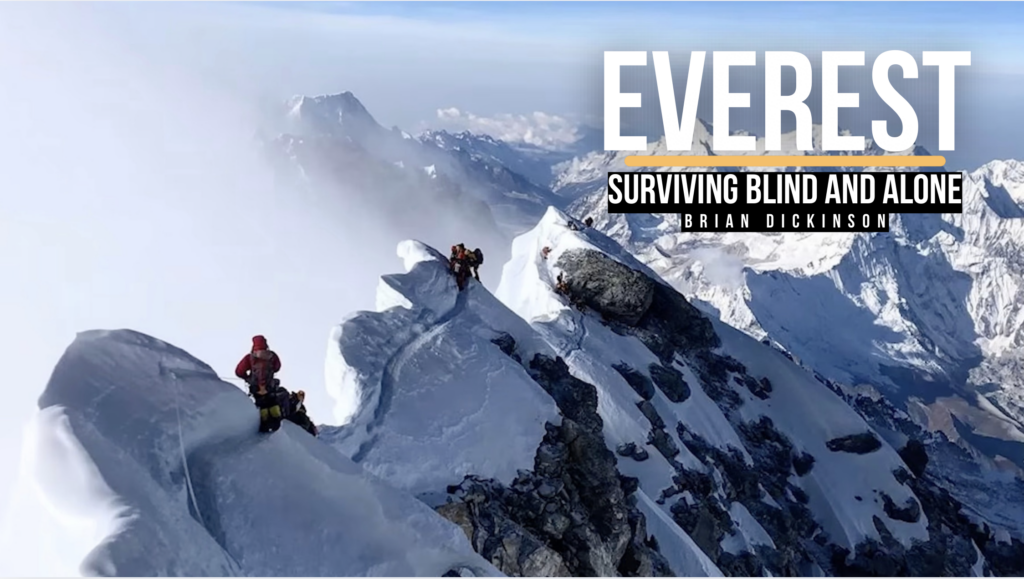
Climbing Everest Bottom to Top – YouTube
This playlist features raw expedition footage from Mount Everest, documenting the climb, the summit, and the descent from the highest point on Earth. It includes firsthand visuals and reflections from Brian Dickinson, a former U.S. Navy Aviation Rescue Swimmer who completed a solo summit and survived a blind descent through the Death Zone.
Related:
• How Hard is it to Climb Mount Everest?
• Navy Rescue Swimmer Training Requirements
• Calm in the Chaos Podcast
• Everest Expedition Footage